Have a break. Have a brand lesson
Why KitKat’s out-of-home ads are a masterclass in proper positioning, and what a chocolate heist tells us about the power of distinctive brand assets.
Somewhere in Europe right now, there's a truck containing 413,793 KitKat bars that nobody can find.
In late March 2026, a vehicle carrying 12 tonnes of KitKat Formula 1 bars were stolen in transit between a factory in central Italy and its destination in Poland. Totally vanished! Most brands would have quietly handed this to their PR team, issued a dry corporate statement and quietly hoped the internet moved on... But not KitKat.
Their spokesperson said the thieves had "taken the message too literally and made a break with more than 12 tonnes of our chocolate." They created a publicly accessible Stolen KitKat Tracker - an online tool where anyone could check whether their chocolate bar was from the missing batch. In Canada, they posted a video of a KitKat delivery truck flanked by a full security detail: "When the chocolate's THIS good, you've got to call back up."
The internet lost its mind. Ryanair joined in. Crumbl Cookie joined in. Every brand in shouting distance wanted a piece of it and drove billions of impressions, and a fair few laughs.
But none of that ‘crisis comms’ brilliance works unless you already own the word break. Unless that word is so thoroughly and irrevocably yours that a spokesperson can deploy it in a statement and the entire world immediately gets the joke. That level of cultural shorthand doesn't happen by accident. It takes decades of relentlessly consistent, emotionally intelligent brand-building to get there.
There’s a particular kind of confidence you only get when your brand is absolutely ‘nailed on’ like this. Not the “we’ve got a set of brand guidelines” kind of ‘nailed on’, but the kind where you can chop your brand in half, remove most of it, and people still recognise you instantly.
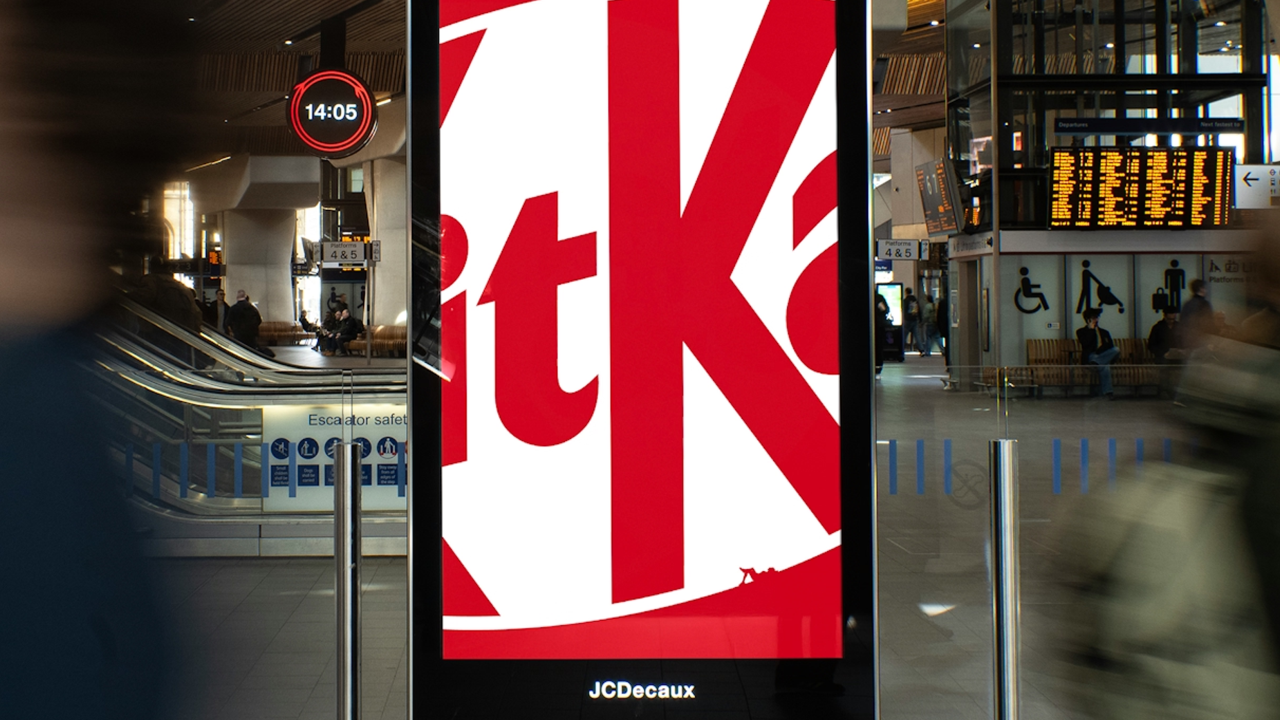
That’s exactly what KitKat have done with their latest out-of-home campaign, Little Breaks.
And it’s ground-break-ingly good! (sorry not sorry)
The ad that barely exists
Let’s start with what we’re actually looking at. It’s a big red billboard with a few cropped white shapes, and maybe a couple of letters if you’re lucky. There’s no product in shot, no logo, no tagline, no explanation. And yet… you know exactly who it is. Look a bit closer and you notice delightful little characters sitting on their perch and… taking a break. It invites the audience to linger a little longer to notice the twist, and ponder slowing down themselves.
That’s not just clever creative. That’s decades of disciplined brand building paying off.
What KitKat are doing here isn’t really “advertising” in the traditional sense. They’re triggering memory structures. Red and white, a suggestion of the logo, a subtle character chilling out… and your brain does the rest. It happens in a split second, before you’ve even consciously processed it. Kahneman would call it System 1. Ehrenberg-Bass would call it mental availability. Most marketers would get hacked off that only being able to use 3 distinctive assets was ‘stifling their creative aura’!
This only works because of proper strategy
You cannot run an ad like this unless your strategy is rock solid. And a rock solid strategy is knowing who you’re trying to talk to and what you’re trying to say… or ‘positioning’.
KitKat’s positioning is brutally simple and has been for decades. They don’t sell chocolate, they sell ‘breaks’. Not wafers, not 4 little snap off bars, not chocolatey indulgence. A break. That’s the emotional benefit the customer is really buying.
Way back in 1957, KitKat’s brief was all about the factory worker’s 11am tea break. Nobody would have predicted that, all these years later, in a world of doomscrolling and push notifications the same idea would feel just as fresh. But it does. Because that original insight was never really about the tea break; it was about the human need for respite. And that never goes out of fashion!
So, having stuck to that positioning relentlessly ever since, they now own the idea in people’s heads. Which means they can show you half a logo on a red background and your brain fills in the rest.
That’s not creativity. It’s consistency.
Distinctive assets do their heavy lifting
Layer on some distinctive brand assets to the equally good creative and it becomes even more powerful. That specific shade of red. The white logotype. The four-finger format. The “Have a break” line. The snapping ritual.
Individually, they’re not much to get excited about but, together, they’re unmistakable.
More importantly, KitKat haven’t “pissed about” with their assets every couple of years because someone at the top fancied a refresh. They’ve been applied consistently over decades, which is why this campaign works. You’re not really looking at a billboard, you’re looking at a mental shortcut. A compressed signal that says “you already know who we are and what we stand for.”
System1’s ad testing backs this up as well. The campaign performs strongly because it’s doing what effective advertising should do - creating fast, emotional recognition rather than slow, rational persuasion.
“Little Breaks” is an evolution, not a reinvention
What I like most about Little Breaks is that it doesn’t try to reinvent anything. It’s not a big new platform or a left-field idea conjured up to "appeal to gen z". It’s just a sharper, more distilled expression of the same core thought they've been running for decades.
When your brand is weak, you need to shout. When it’s strong, you can speak softly… and KitKat are barely whispering here!
What often gets overlooked with brand building is that it’s not just about awareness or reach or looking 'premium'. It’s about building that mental availability and emotional equity over time so your advertising works harder, your assets do more of the job, and when something goes wrong, you’ve got goodwill in the bank.
Most brands aren’t anywhere near this. They’re stuck in a cycle of new campaign, new look, new tone, new idea… and in doing so, they reset everything before it’s had a chance to stick.
KitKat have been doing the same thing for nearly 70 years. They’ve put in the hard yards and earned the ability to run an ad with half a logo and still make it land.
What this means for you
If you take one thing from this, it’s this: stop trying to be original, and start trying to be remembered.
Your job as a marketer is not to come up with something new. It's to come up with something true - and then have the discipline, patience, skill, and nerve to keep doing it until it sticks. Until your positioning becomes reflexive. Until your assets become you.
That takes time, it takes consistency, and it takes resisting the urge to fiddle with it every time you get bored. Because one thing’s for certain: you'll always get bored of it before your customers have even noticed it.
Get your positioning right. Build your assets. Protect them like 12 tonnes of chocolate on a truck through central Europe...
And if someone does steal them? Make sure your brand is strong enough that you can afford to have a laugh about it.
That's proper marketing.