Why cutting your training budget costs more than it saves
There are plenty of good reasons for hospitality businesses to be looking hard at their costs at the moment. Wage costs are up, margins are being squeezed in every direction and customers are being more careful with their own money... which will only get worse if the government decide to impose their planned tourist tax. So, with 2027 budget season rapidly approaching, something somewhere will inevitably have to give.
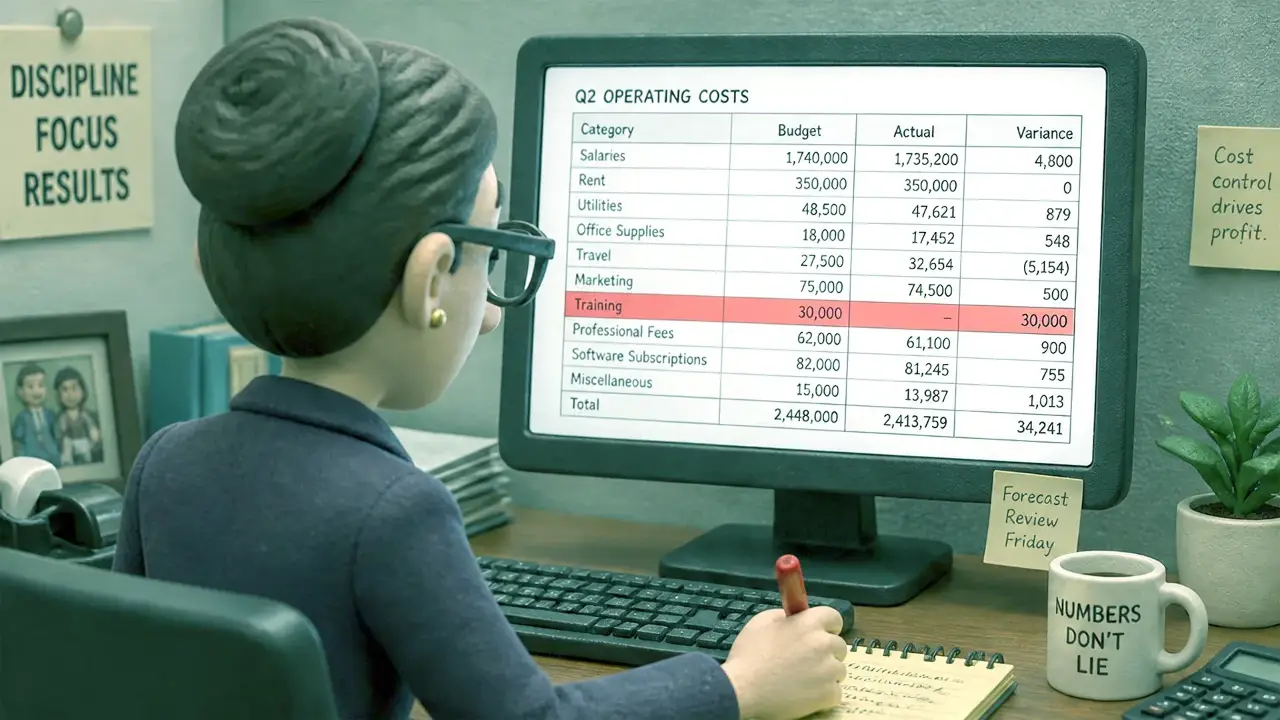
Training is usually one of those lines that’s easy to put a red pen through.
To a point, I can understand the logic. Finance people necessarily deal in the immediacy of cash flow and in-year profitability. That’s not to suggest they don’t appreciate the longer game, but their attention is understandably drawn towards what’s happening right now. There are costs to control, targets to hit and a P&L that needs to add up. Against that backdrop, if you cancel a training programme, nothing particularly bad happens. The hotel still opens, the restaurant still serves dinner, and the conference still goes ahead. You can always start training people again when things improve, right?
Except catching up costs a lot more than keeping up.
When everyone else retreats, you gain ground
We already know there's a similar danger in cutting advertising spend during difficult economic periods, thanks to the work of people like Peter Field and Les Binet. Businesses that maintain their investment, while competitors cut theirs, increase their relative Share of Voice without actually spending any more. They gain ground simply because everyone else is retreating.
So, perhaps we should think about training and development in much the same way.
Call it Share of Skills.
Let’s say ten hospitality businesses are competing for roughly the same customers and the same talent. If eight respond to difficult trading conditions by cutting training and development, what happens to the other two? If they carry on developing their managers, training their marketers, improving commercial skills and developing future leaders, the savings made by the other eight might look better on this year's P&L, but the two that carried on have spent that year getting better.
If you treat training and development purely as a cost to control in-year, then it’s easy to overlook its longer-term importance. The value isn't what happens during the training itself, it's what people do differently afterwards that counts. A better manager applies what they've learned every day. A salesperson takes improved commercial skills into every future conversation. A properly trained marketer makes better decisions and creates more future customers.
And let’s be brutally honest. Hospitality is already haemorrhaging its Share of Skills.
The numbers tell their own story
Skills England's 2026 Annual Skills Report shows that real-terms training investment per employee in hotels and restaurants has fallen from £2,790 in 2011 to just £1,320 in 2024.
That's a 53% reduction.
Research published by the Learning and Work Institute in September 2026 paints a similar picture across the wider economy. Investment in training per employee has fallen by 29% since 2011 and the average amount of training has dropped from 7.8 days per trainee to 5.7. More than half of UK training now lasts only a day or less, with an increasing focus on mandatory and compliance training rather than longer-term development.
In other words, we're not just training people less. We're increasingly training them to comply rather than training them to get better.
That's not acceptable for an industry which has spent years talking about recruitment and retention. We constantly ask how we can attract people into hospitality and how we persuade good people to stay. Well, perhaps we should spend more time asking how good are we making the people who do stay?
If every hospitality business wants commercially minded general managers, brilliant salespeople, experienced revenue managers and strategic marketers, those people have to develop those skills somewhere. Otherwise, we're all just trying to recruit them from each other.
The damage doesn’t happen tomorrow
The problem with cutting development (or worse, not investing in it at all) is that you probably won't notice you've done it for quite a while. If you stop buying food, people notice. If you stop maintaining the building, sooner or later something breaks… but stop training people and tomorrow will probably look remarkably similar to today.
Meanwhile, those people haven't stopped doing their jobs. Managers are still managing. Salespeople are still selling. Marketers are still deciding who to talk to and what to say.
I see this all the time in marketing. People are given responsibility for substantial budgets without ever having received proper training in marketing. They might know how to create content, send emails and post on social media, but knowing how to use the tools isn't the same as understanding marketing. Not giving them that training doesn't stop them making marketing decisions. It just means they're making those decisions based on whatever they've managed to pick up along the way.
Which brings us back to Share of Skills.
When everyone else is investing in their people, you need to do the same just to keep pace. When budgets tighten and your competitors start cutting training, continuing to invest gives you a competitive edge…
You're still moving whilst they’re standing still.
The one thing economists can agree on is that downturns eventually end, just as surely as they begin. Conditions improve. Budgets loosen. The businesses that stopped developing their people start spending again… but they're starting from wherever they stopped. You've had another year or two of developing yours. They can recruit the skills they're missing, assuming they can find them, or they can start training their people again and wait for them to catch up.
But catching up costs a lot more than keeping up.
So, as you're looking at the 2027 budget and somebody suggests training is something you can pick up again when trading improves, don't just ask how much you'll save by cutting it…
Ask what Share of Skills you’ll lose while you wait.
If you're responsible for training or developing a hospitality marketing team, my online Hospitality Marketing Academy can be delivered to groups and cohorts on-demand, meaning they don't spend valuable time out of the business. Find out more about group bookings.